
Case Study
Review: processing capacity bottlenecks in europe’s critical minerals chain


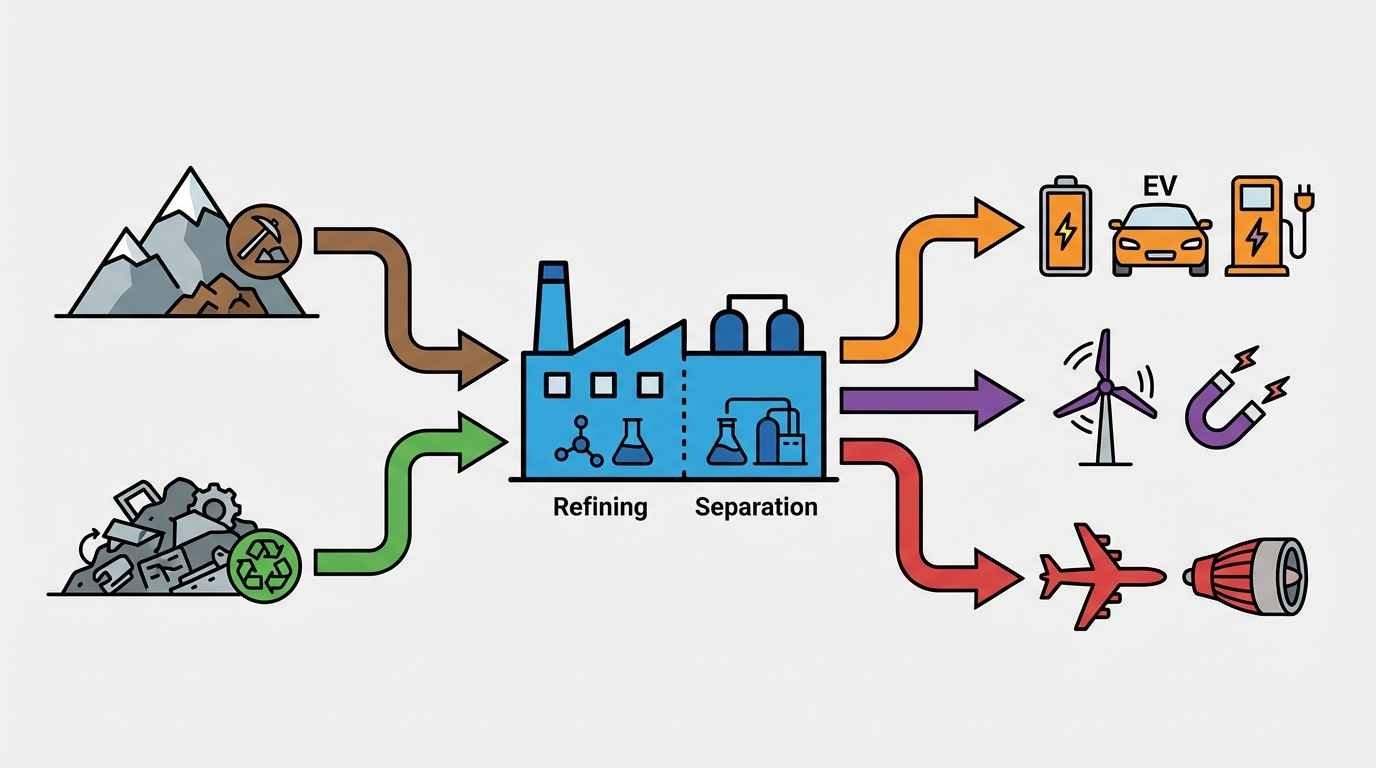
Processing is increasingly the tightest choke point in Europe’s critical minerals chain. Mining projects in and around the continent are progressing, and downstream gigafactory and magnet capacity is expanding at pace, but the midstream – refining, separation and advanced recycling – remains structurally constrained. Over the past audit cycle, monitoring of a dozen European and near-European plants highlighted a consistent theme: facilities are operating close to practical limits, and marginal disruptions at a handful of nodes can cascade through battery, magnet and catalyst supply lines.
This review reframes that internal analysis for a public audience, focusing on operational continuity and supply chain risk rather than policy aspirations or financial angles. The emphasis is on how actual plants run, what is constraining throughput today or in the near term, and where the system looks most fragile from the perspective of European autonomy targets for lithium, nickel, cobalt, rare earths and platinum group metals (PGM).
Scope and Analytical Lens
The evaluation covers a set of representative assets across the chain:
• Lithium: Keliber’s lithium hydroxide refinery in Finland, Metso-Outotec’s lithium pilot in Pori, Eramet’s Dunkirk tie-in, a Slovak lithium hydroxide project, and the Recyclus lithium recycling plant in Germany.
• Nickel and cobalt: Umicore’s Hoboken refinery (Belgium), Terrafame’s nickel-cobalt chemicals operation (Finland), and Johnson Matthey’s precursor cathode plant in Poland.
• Rare earths and magnet recycling: LKAB’s rare earth separation initiative in northern Sweden, Wood Group’s UK rare earth recycling pilot, and Ionic Technologies’ battery metals recycling plant in Belfast.
• PGM recycling: Up Catalyst’s platinum and palladium recycling facility in Estonia.
Rather than ranking them as in the original internal work, this article uses them as case studies to illustrate structural bottlenecks and “risk inflection points” – the conditions under which relatively small shocks could meaningfully disrupt flows of critical materials to European battery, hydrogen, wind and defense manufacturers.
Lithium: Refining as the Critical Constraint
The lithium chain illustrates most clearly how Europe’s physical infrastructure lags policy ambitions. Several new and planned plants create the appearance of progress, yet their combined capacity and vulnerability profile show that midstream remains a thin, high-risk layer.
Keliber lithium refinery (Finland) is designed as a flagship: an integrated system linking a spodumene mine at Syväjärvi with a refinery producing battery-grade lithium hydroxide. Project documentation points to high-purity output and a direct link into Nordic battery manufacturing. During qualification discussions, operators emphasized a fairly conventional flowsheet – concentration, roasting, and soda-ash-based leaching – which reduces technological risk but introduces a different dependency: reagents and energy.
Operational monitoring highlighted three main continuity challenges around Keliber:
• Permitting and community interface: Even with political backing and Critical Raw Materials Act (CRMA) fast-track provisions, permitting timelines stretched, influenced by water usage concerns and engagement with local communities in Finland’s north. Any tightening of environmental regulation, or breakdown in local acceptance, would be felt immediately at the processing end because the mine and refinery are tightly integrated.
• Reagent dependence: The refinery concept relies heavily on soda ash and other processing inputs that are still substantially sourced from outside Europe, with a significant China-linked component. During chemical market tightness, refinery utilization was capped below design levels when reagents became scarce or more erratic in delivery. This creates an indirect China exposure even where ore is fully European.
• Baltic logistics and geopolitics: Concentrate and reagent flows, as well as outbound lithium hydroxide, move through Baltic Sea routes and Finnish ports. Since the escalation of tensions around the Baltic and the Russia–Ukraine conflict, operators have had to factor in rerouting, insurance constraints and port congestion. The lithium plant’s effective supply radius for risk-resilient deliveries shrinks under those conditions.
Metso-Outotec’s lithium processing pilot in Pori presents a different type of bottleneck: technology scale-up. The plant’s modular design and work on direct lithium extraction (DLE) and hard-rock processing create a pathway to more flexible European refining capacity. Yet during evaluation, DLE performance remained below target efficiency levels and electricity grid constraints restricted uptime. This combination of unproven process performance at scale and power system limitations translates into a continuity risk that is more about uncertainty than about today’s capacity shortage.
Eramet’s lithium carbonate route into Dunkirk, based on South American brines with downstream conversion in France, shifts some of the constraint away from domestic permitting but trades it for logistics and labor reliability. Shipment windows from Argentina, port congestion and periodic strike action in France were repeatedly flagged as operational headaches. From a European autonomy standpoint, the refinery footprint is on EU soil, but continuity still hinges on non-European upstream and on stable port and labor conditions.
The Slovak lithium hydroxide project and Recyclus’ lithium recycling plant in Germany are often viewed as part of a “second wave” of capacity. In both cases, continuity questions concentrate around infrastructure and feedstock rather than process chemistry: water rights and grid upgrades for the greenfield Slovak facility, and sufficient and predictable battery scrap volumes for the German recycler, especially as new EU scrap rules reshape material flows within and beyond the bloc.
Viewed as a system, these facilities highlight a simple reality: European lithium refining remains quantitatively modest relative to projected demand and qualitatively exposed to reagents, grids, labor and shipping routes that sit outside operator control.
Nickel and Cobalt: High Utilization, Narrow Headroom
Nickel and cobalt processing in Europe is more mature than lithium but is now facing a different kind of bottleneck: plants are essentially full, and environmental and feedstock constraints limit expansion.
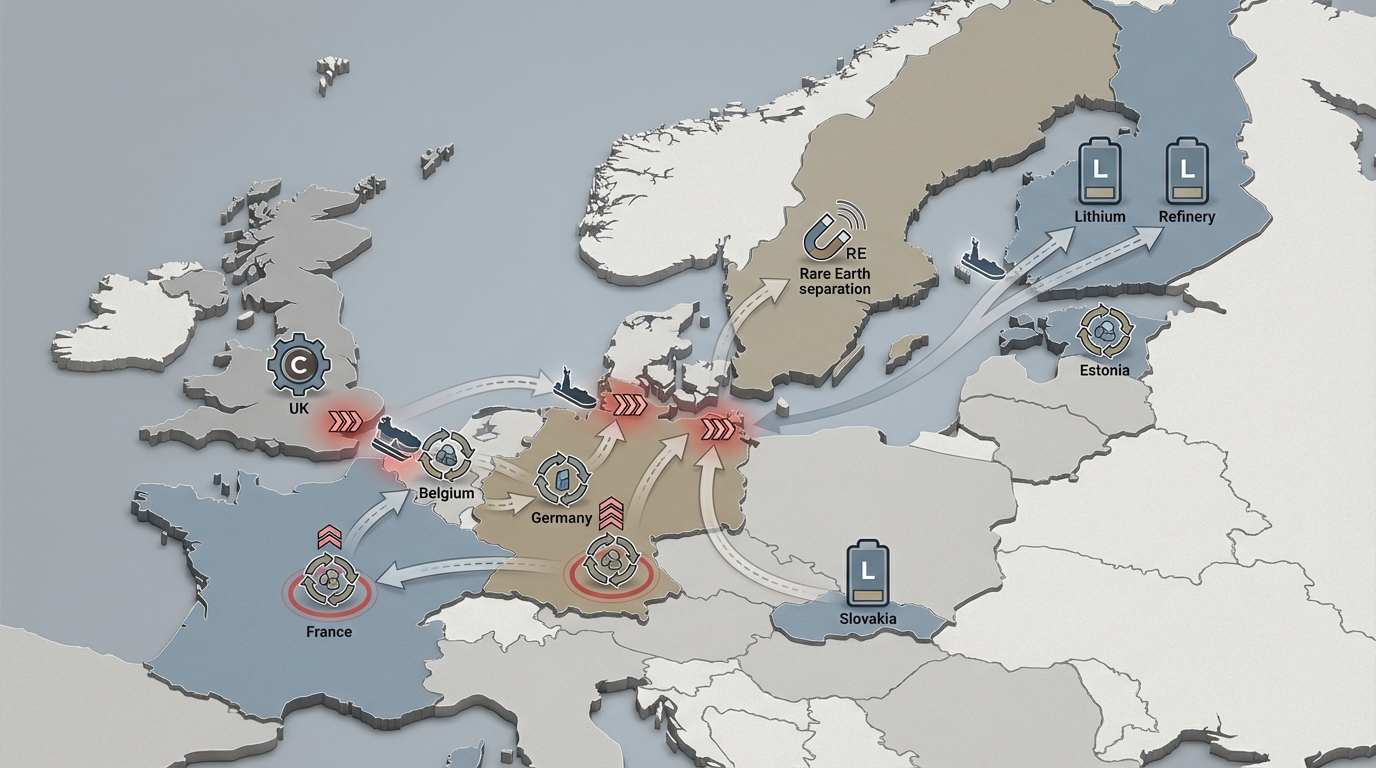
Umicore’s Hoboken refinery in Belgium has evolved into a cornerstone for non-Chinese cobalt and nickel sulfate in Europe. Hydrometallurgical processes convert both primary feeds and recycled battery “black mass” into battery-grade sulfate salts, with ancillary recovery of minor metals. During the most recent review period, three features stood out:
• The plant has operated at or near its effective capacity, to the point of turning away some inbound material or placing it in long queues.
• Planned expansions encountered environmental permitting friction, particularly around air emissions, delaying the point at which additional tonnage could be made available.
• Feedstock availability is shaped by European policies on scrap exports; tighter rules reduce leakage of valuable materials but also compress the margin for error in domestic collection systems.
A disruption at Hoboken – whether regulatory, technical, or related to an incident – would be difficult to offset in the short term, given limited alternative cobalt sulfate processing capacity in the region and long lead times to qualify new suppliers for battery production.
Terrafame in Finland, operating a bioleach and pressure oxidation route, has built a profile around large-volume nickel sulfate and smaller but high-quality cobalt output. Tailings management and sulfuric acid supply define the continuity risk picture. Expansion of tailings storage encountered permitting delays, and domestic sulfuric acid availability reached its own constraints. This couples the fate of the refinery to two largely separate regulatory and industrial systems: waste and chemicals. Even if ore and plant perform as expected, an unfavorable decision in either of these domains can cap or curtail production.
Johnson Matthey’s precursor cathode materials facility in Poland operates further downstream, but its feedstock and energy profiles loop it back into the critical minerals risk map. The facility converts nickel and cobalt sulfates into NCM precursors through co-precipitation. Operators have flagged variability in upstream metal quality and coal-heavy grid power as sources of operational friction. Intermittent downtime linked to energy pricing and availability, combined with a shortage of specialised engineering talent, shows how even ostensibly “simple” conversion capacity can be harder to run continuously than headline numbers suggest.
Rare Earths and Magnet Recycling: From Pilot to Systemically Relevant
Rare earths (REE) and magnet recycling embody the sharpest contrast between strategic importance and current scale. Europe is still at the demonstration and early commercial stage for most REE separation assets, yet those same facilities underpin ambitions to reduce dependence on Chinese NdPr and other key magnet oxides.
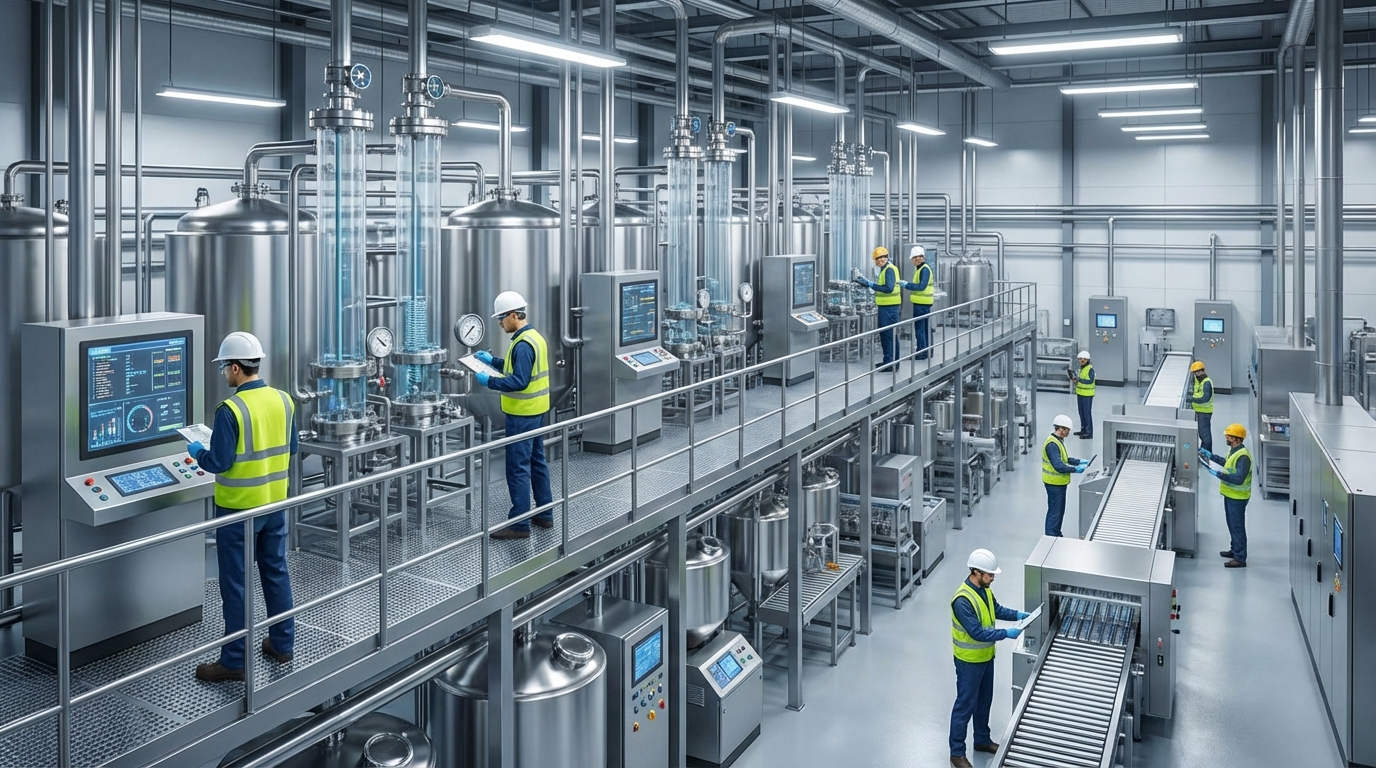
LKAB’s rare earth separation initiative in northern Sweden is a central piece of this puzzle. The project aims to recover REE from apatite-rich tailings at existing iron ore operations, moving from a demonstration plant to larger-scale separation. On paper, this approach elegantly combines waste valorisation with strategic material output. In practice, several continuity challenges emerged during on-site and remote assessments:
• Regulatory complexity around radioactive by-products: Even low-level thorium and uranium in tailings trigger stringent oversight from radiation safety authorities. Approvals for handling, storage and potential disposal routes extend timelines and add operational conditions that can affect throughput flexibility.
• Dependence on imported organic solvents and reagents: The solvent extraction circuits used for REE separation rely heavily on specialized organics, a large share of which are produced in Asia. Any tightening of export controls or transport disruption in that segment could directly throttle REE output, regardless of ore availability.
• Arctic operational conditions: Labor availability, extreme weather, and the reliability of supporting infrastructure (power, transport) in the far north introduce resilience questions that do not appear on a simple capacity sheet.
On the recycling side, Wood Group’s magnet-focused rare earth pilot in Birmingham and Ionic Technologies’ recycling plant in Belfast demonstrate promising hydrometallurgical routes for recovering NdFeB magnet metals and battery metals from end-of-life products. However, both are currently positioned at relatively modest scales. For system-level continuity, two points are particularly relevant:
• Post-Brexit regulatory divergence complicates scrap flows between the EU and UK. Duties and paperwork on cross-border movements of magnet scrap and black mass reduce the natural balancing function such recycling hubs might otherwise provide.
• The relatively small absolute capacity means that, while valuable for niche and early-stage de-risking, these plants cannot yet absorb major shocks to primary REE or battery metal imports. Their risk profile today is more about technology concept continuity than about continental-scale availability.
Platinum Group Metals: Recycling Under Energy and Feedstock Pressure
PGM supply into Europe was heavily reshaped by sanctions and geopolitical realignment after 2022. In that context, Up Catalyst’s recycling facility in Estonia has taken on outsized importance as a regional node for platinum and palladium recovery from spent automotive catalysts and other industrial scrap.
Process audits highlighted strong metallurgical performance, with high recovery rates for platinum and palladium through pyrometallurgical smelting combined with leaching. The limiting factors sit elsewhere in the value chain:
• Feedstock sourcing: The plant leans significantly on scrap generated in core automotive manufacturing countries such as Germany. Proposed and implemented EU scrap regulations, especially around aluminum and mixed metal exports, have knock-on effects for how catalytic converters and mixed PGM-bearing scrap move within Europe. If collection and sorting systems do not adapt, the Estonian facility can find itself running below its nominal capability simply because material is stranded or diverted.
• Energy price volatility: The energy-intensive nature of PGM smelting means that spikes in regional power and gas prices translate rapidly into operational decisions. Episodes of elevated energy costs in the Baltic region forced closer scrutiny of run schedules and, in some cases, trimming of throughput.
This combination – structurally important output, but sensitivities to both upstream scrap systems and energy markets – places PGM recycling firmly in the category of assets where “hidden” externalities can undermine processing continuity without any failure in core metallurgical operations.
Cross-Cutting Bottlenecks and Critical Findings
Comparing these assets across commodities reveals a set of recurring structural bottlenecks. These are less about any single plant and more about how Europe has configured its critical minerals midstream to date.
- High utilization with minimal surge capacity – Many lithium, nickel, cobalt and PGM plants already operate close to their practical ceilings, leaving little room to absorb disruption elsewhere.
- Regulatory and permitting drag – Environmental, radiation and tailings regulations extend lead times for both greenfield and brownfield expansions, often beyond policy “fast-track” targets.
- Feedstock and reagent fragility – Even where ores are European, reagents, sulfuric acid, organic solvents and scrap streams frequently depend on non-European suppliers or on fragile intra-EU logistics.
- Grid and energy exposure – Plants in coal-heavy or constrained grids face downtime and carbon pricing risks, while smelters and hydromet plants are especially sensitive to power price volatility.
- Regulatory fragmentation (EU vs. UK, national vs. EU) – Divergent scrap, waste and product rules complicate cross-border balancing of material flows.
These factors shape the operational reality far more than headline capacity announcements. A 15,000-tonne-per-year refinery that runs at 70% utilization due to reagent shortages and permitting conditions is effectively smaller – and more fragile – than it appears on policy scorecards.
Risk Inflection Points: What Could Tighten or Loosen the System
From a continuity perspective, several developments act as “risk inflection points” – thresholds beyond which the character of supply risk shifts materially, either for better or worse.
1. CRMA implementation performance
The Critical Raw Materials Act sets indicative timelines for permitting and aims to align national authorities around common goals. Where local regulators have aligned with those targets, expansions and new processing facilities have moved more predictably, reducing uncertainty. Where interpretation has been stricter, or where public opposition intensified, delays extended into multi-year territory. If, in practice, the fast-track provisions remain aspirational, the present state of tight processing capacity is likely to persist well into the next decade.
2. Chinese export controls on processing inputs and intermediates
The public discussion around Chinese export controls has focused on gallium, germanium and certain rare earths. For European processors, an equally consequential issue lies in less visible inputs: extractants, organic solvents, specialty reagents and certain intermediate compounds. A tightening of controls on any of these can quietly curtail operational rates at European separation plants even if raw ore imports remain stable.
3. European scrap and waste regulation
The trajectory of EU rules on scrap exports and waste classification will define the volume and quality of material available to recyclers such as Umicore, Up Catalyst, Recyclus and the REE recycling pilots. If regulation effectively channels more high-quality scrap into domestic recycling loops, these plants can play a greater role in relieving midstream bottlenecks. If, instead, compliance burdens and classification uncertainties cause material to be stockpiled, exported in less visible forms or under-sorted, the recycling pillar of critical minerals strategy will underperform its potential.
4. Grid decarbonisation and reinforcement
For facilities in Poland, Slovakia, parts of Germany and the Baltics, grid evolution will directly influence uptime and expansion prospects. Cleaner, more stable grids reduce both operational risk and regulatory pressure tied to carbon intensity. Delays in grid reinforcement, by contrast, are already manifesting as constraints on new plant connections or caps on draw, especially for hydrometallurgical and high-temperature processes.
5. Labor and skills availability
Several operators reported difficulty in recruiting and retaining specialised process engineers, solvent extraction specialists, and high-voltage maintenance teams. This is most acute in remote regions such as northern Sweden and parts of Finland, but is increasingly felt in more central locations as competition for talent intensifies. Insufficient skilled staffing can transform what appears to be a capital or permit-constrained problem into a human capital bottleneck.
Operational Signals to Monitor
Over the course of monitoring these facilities, certain indicators proved particularly useful in gauging the robustness or fragility of Europe’s critical minerals processing chain:
- The gap between nameplate and actual utilisation at key lithium, nickel, cobalt and PGM plants.
- Changes in lead times and acceptance criteria for feedstock at major refiners and recyclers.
- Regulatory milestones: permit renewals, environmental consent modifications, and public inquiries affecting expansions.
- Shifts in sourcing for critical reagents and solvents, including any visible moves to diversify away from single-country dependencies.
- Evidence of successful scale-up from demonstration to commercial capacities in REE separation and advanced recycling technologies.
These signals often move before more visible indicators such as plant shutdowns or public capacity announcements. For example, lengthening qualification queues at a cobalt sulfate refinery or increasing variability in product quality at a new lithium plant typically emerge months before any formal notice of constrained supply reaches downstream manufacturers.
Conclusion: A Thin Midstream Under Strategic Strain
The facilities examined here represent some of Europe’s most advanced and strategically significant processing assets for lithium, nickel, cobalt, REE and PGMs. In isolation, many of them are technically sophisticated and well-run. Collectively, they form a midstream that is still thin, highly utilised and exposed to a web of external dependencies – on imported reagents, on fragile logistics corridors, on complex permitting processes, and on grids and labor markets in transition.
Against the backdrop of European targets for domestic extraction, processing and recycling by 2030, this analysis suggests that the bottleneck has shifted decisively toward processing capacity and its enabling systems. New refineries, separators and recyclers are emerging, but their contribution to real-world supply security depends less on headline capacity figures than on the quiet details of operational continuity: whether tailings dams are approved on time, whether a single solvent supplier in Asia has an outage, whether a port strike extends dwell times from days into weeks.
For supply chain planners in batteries, magnets, catalysts and defense materials, the central operational insight is that Europe’s critical minerals chain currently behaves as a network with several single or near-single points of failure in the midstream. Monitoring the health of these nodes – and of the regulatory and logistical ecosystems around them – remains essential to understanding how resilient, or fragile, European access to critical materials will be through the rest of this decade.


