
Top 10 Strategic Materials Projects Likely to Slip Past Their Announced Timelines
Forward supply plans in defense, EV batteries, grid upgrades and AI data centers all assume a wave of new strategic materials projects arriving between 2026 and 2029. In practice, many of the flagship assets underpinning those plans are colliding with resource nationalism, community resistance, and fragile infrastructure. Materials Dispatch tracks a recurring pattern: once political risk enters the critical path, commissioning dates move in multi-year increments, not quarters.
This briefing ranks 10 high-impact projects most likely to slip beyond their announced timelines, using political risk as the primary lens. That includes direct state intervention, export controls, social license breakdowns, constitutional reform, and the “weaponization of industrial supply chains” between major blocs. Operational complexity, capex inflation, and logistics are considered, but only where they intersect with the political layer and extend real-world lead times toward the 15+ years now common in complex jurisdictions.
Every entry follows the same structure: the asset and its status, the strategic context in global supply chains, the core bottlenecks undermining timeline guidance, and a verdict on who can realistically rely on the project and who should treat it as optional upside. The list spans copper, lithium, iron ore, rare earths, phosphates and gold-copper by-products-exactly the mix that defense, EV and grid planners are counting on to navigate a copper shortfall expected around 2026 and a rare earth landscape still ~90% dependent on China-centric processing.
The rankings will be controversial. Several assets are heralded as “solution” projects in official critical minerals strategies and corporate roadshows. On the ground, community permits, rail corridors, or state equity negotiations tell a different story. For supply chain and compliance teams, the question is not whether these mines and plants will ever operate-most will-but whether they’ll be online in time to meet 2027-2030 offtake assumptions. On that timing, the risk profile is starkly asymmetric.
1. Grasberg Block Cave Underground Expansion (Indonesia, Papua Province)

The asset/risk. The underground block cave expansion of Grasberg is designed to sustain roughly 1.3 Mt per year of copper equivalent plus over a million ounces of gold, replacing the exhausted open pit. Public guidance points to a phased ramp-up completing around 2027. That now looks optimistic. A significant 2025 geotechnical incident and extended remediation have already pushed critical milestones, and the political environment is becoming more intrusive, not less.
Strategic context. Grasberg is one of the world’s key copper hubs at a time when the global system edges toward its largest supply gap in more than two decades. High-grade Indonesian concentrate feeds smelters that ultimately supply wiring for data centers, defense electronics, power grids and vehicle harnesses. If copper does move toward the $15,000/t scenarios being modeled for late in the decade, the path will almost certainly run through what happens in Papua.
The bottleneck. Indonesia’s resource nationalism—manifest in majority state ownership, tightening export rules and local processing mandates—means technical setbacks quickly become political bargaining chips. Each permit renewal or export approval is an opportunity for Jakarta to extract additional concessions, extend domestic smelting requirements, or revisit fiscal terms. The 2025 mud rush and safety investigations created a natural pause for regulators to reassess, effectively blending operational risk with policy leverage and dragging timelines to the right.
The verdict. For downstream users, Grasberg remains system-critical, but as a timing anchor it’s fragile. Defense and data-center supply chains that assume a smooth 2026-2027 ramp are underestimating the probability of further slippage into 2028 and beyond, especially if Indonesia couples export permits to broader industrial policy. This project is best treated as a core volume source with high continuity risk: fine for diversified portfolios, hazardous for single-asset-dependent copper or gold strategies.
2. Jadar Lithium-Borate Project (Serbia, Western Serbia)

The asset/risk. Jadar, a large hard-rock lithium-borate deposit in western Serbia, is nominally positioned to deliver around 58,000 t/y of LCE once in production. Official narratives periodically resurface around a potential restart, with talk of a final investment decision later this decade and operations post-2028. On the ground, the project remains shelved, its environmental permits revoked after mass protests and sustained political backlash.
Strategic context. For European battery and defense planners, Jadar was pitched as the cornerstone of a regional lithium supply chain—reducing exposure to South American brines, Australian spodumene, and Chinese conversion capacity. EU industrial strategies still reference domestic or near-European lithium as a key pillar in de-risking EV and stationary storage supply chains. Yet the EU’s ambitions sit uneasily with Serbian domestic politics and a population that has turned large-scale mining into a proxy fight over governance and environmental trust.
The bottleneck. The core obstacle is social license translated into hard law. Protests in 2021-2022 triggered a political commitment to halt the project, followed by permit cancellations that would require a near-complete reset of the environmental and planning process. Any attempt to revive Jadar intersects with election cycles, EU alignment debates, and a regional narrative of foreign companies extracting value while locals absorb the externalities. That dynamic mirrors resistance seen in Nordic REE projects and makes linear permitting timelines unrealistic.
The verdict. Jadar’s geology is not in dispute; the timeline absolutely is. For OEMs and cathode producers, Jadar shouldn’t be embedded into near-term supply plans; it’s more akin to a 2030s option with binary political risk. Entities with higher risk tolerance and long-duration horizons may view it as a potential strategic pivot if EU–Serbia relations deepen meaningfully. For those needing secure lithium units before 2030, Jadar is better treated as non-core upside rather than a planning anchor.
3. Sokli Phosphate–Iron–REE Project (Finland, Savukoski)

The asset/risk. Sokli, in Finland’s far north, is an ambitious integrated project combining phosphate, iron and rare earth elements. Current concepts envision around 2 Mt/y of phosphate and iron concentrates plus a still-evolving rare earth stream, with feasibility work stretching late into the decade and a staged production profile potentially into the early 2030s. Government stakeholders present Sokli as a model for secure, “clean” European critical raw materials.
Strategic context. In phosphate, Sokli feeds straight into the food-security narrative. In rare earths, it targets the permanent magnets that underpin offshore wind, EV motors and many defense systems. Finland, with strong institutions and existing mining capability, is frequently named as a lower-risk alternative to higher-opportunity but unstable jurisdictions. However, being inside the EU also embeds Sokli in the union’s slow, heavily contested permitting culture.
The bottleneck. The critical path isn’t geology or even capital; it’s permitting across sensitive northern ecosystems and Sámi traditional lands. EU processes offer “strategic project” fast-track branding, but in practice, court challenges and local veto points can extend decisions for years. Sokli must navigate overlapping environmental directives, climate commitments, and indigenous rights frameworks. Any misstep in stakeholder engagement risks litigation that could extend an already long 2027–2032 window toward the late 2030s.
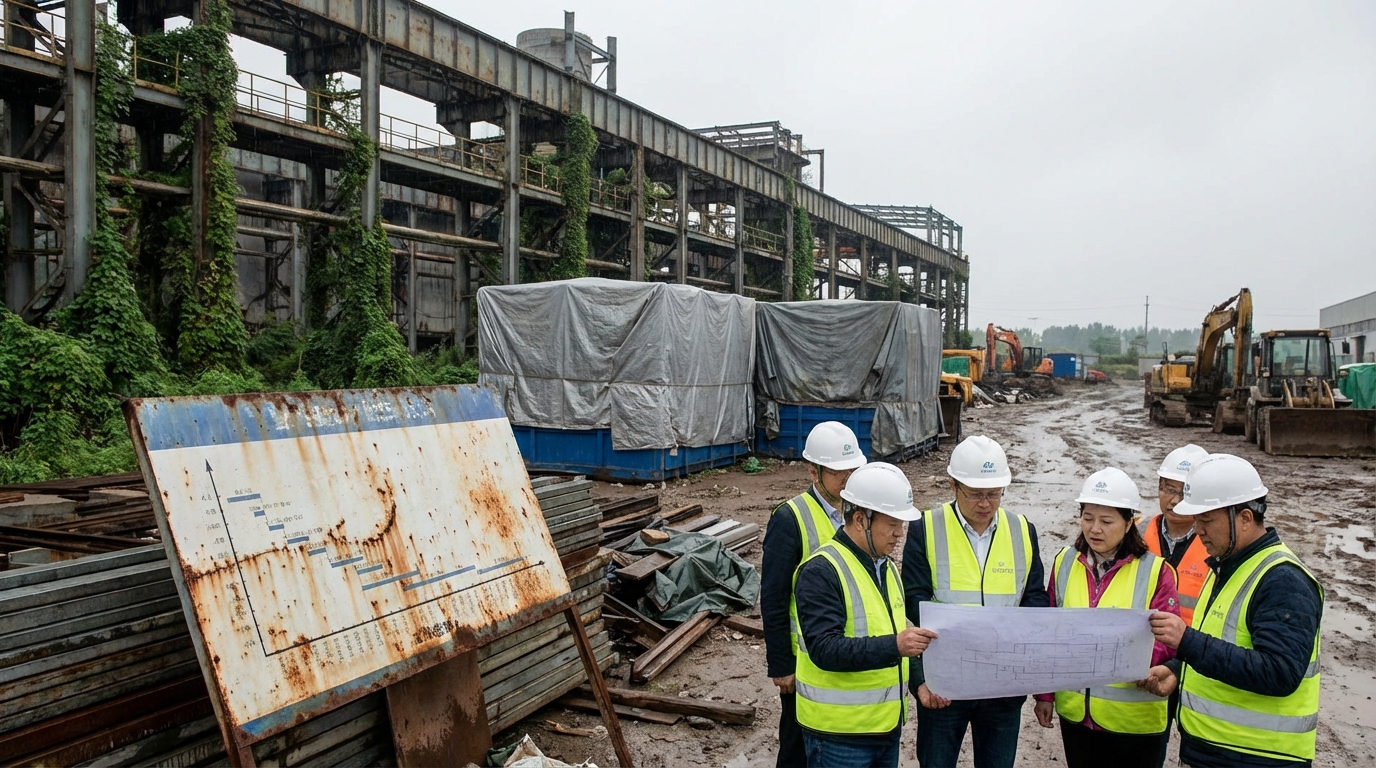
The verdict. Sokli is structurally attractive for European supply chains seeking low-jurisdiction-risk volumes, yet its headline schedules are best viewed as optimistic scenarios. Fertilizer producers and magnet value chains can reference Sokli for long-term diversification, but near- to mid-decade supply security shouldn’t hinge on it. The project suits corporates comfortable with EU regulatory cadence and premium costs; those requiring rapid tonnage increases may find the 15+ years lead time from discovery to full-scale production a significant constraint.
4. Kamoa-Kakula Copper Complex Expansion (DRC, Lualaba/Katanga)

The asset/risk. The Kamoa-Kakula complex, co-developed by Ivanhoe and Zijin in the Democratic Republic of Congo, is ramping toward a multi-phase expansion that could exceed 600,000 t/y of copper. Publicly, additional concentrators and smelter capacity are framed on a mid-to-late decade timeline, stacked on top of already impressive early-phase performance. But as the project’s scale grows, so does its exposure to the DRC’s shifting political and regulatory landscape.
Strategic context. Kamoa-Kakula sits in a region that already supplies much of the world’s cobalt and a rising share of its high-grade copper concentrates. For battery cathodes, power infrastructure and defense systems, the complex is a core node in any realistic supply scenario. Western policy circles frequently cite it, somewhat wishfully, as a counterbalance to Chilean grade decline and Indonesian policy risk.
The bottleneck. The DRC’s governance and infrastructure remain fragile. Road and power constraints already push logistical costs higher and raise the probability of intermittent curtailments. At the same time, political leverage increases as the mine’s global importance grows. Debates over royalties, state equity participation and export policies echo earlier cycles in neighboring copper–cobalt districts. Seismic and geotechnical events add another layer: when remediation intersects with a contentious tax audit or contract review, ramp-up schedules can slide by years rather than months.
The verdict. Kamoa-Kakula should remain a cornerstone supplier of copper into the 2030s, but its expansion milestones are politically exposed. Smelter and power integration plans, in particular, look vulnerable to delay. Utilities, OEMs and defense contractors relying on incremental Kamoa-Kakula volumes from 2026 onward would be prudent to stress-test scenarios where the full 600,000+ t/y profile materializes closer to 2029–2030. The complex fits diversified portfolios comfortable with frontier risk; it’s less suitable as the sole backstop for critical copper exposure.
5. El Teniente New Mine Level Expansion (Chile, O’Higgins Region)

The asset/risk. El Teniente, operated by Codelco, is the world’s largest underground copper mine. The New Mine Level (NML) project is designed to sustain and eventually lift production as existing levels mature, with earlier timelines pointing to substantial contributions around 2026. That schedule has already been revised multiple times due to geotechnical challenges and cost inflation. Recent seismic impacts and remediation needs further pressure the critical path.
Strategic context. Chile remains central to global copper supply, but its giant mines are aging, grades are falling, and water and power constraints are tightening. NML is less about massive new tonnage and more about preventing a sharp decline at a globally important asset. For downstream users, it represents a key factor in whether the copper market leans into chronic deficit or manages a softer landing as energy transition demand accelerates.
The bottleneck. The political environment around mining in Chile has been fluid. Constitutional rewrites, debates over water rights, and demands for greater indigenous and community participation have all introduced uncertainty into project planning. As a state-owned company, Codelco also carries policy obligations that don’t always align with efficiency—local content rules, employment commitments and fiscal needs can stretch budgets and timelines. When combined with complex underground engineering, every technical setback creates an opening for regulatory re-scoping, pushing commissioning targets toward the decade’s end.
The verdict. NML is essential for stabilizing Chilean copper output, but its timeline has drifted into the zone where “on time” is increasingly defined politically rather than technically. Industrial consumers treating NML as a firm 2026–2027 addition are likely to be disappointed. The project best suits long-term planners who assume a staggered ramp through the late 2020s and factor in periods of flat or declining El Teniente output. For those requiring near-term security, alternative sources or secondary copper recovery pathways need greater emphasis.
6. Taiwan Rare Earth Pilot Production Line (Taiwan, Industrial Cluster)

The asset/risk. Taiwan’s proposed rare earth separation and magnet-material pilot line aims to cover a significant share of domestic demand and serve as a strategic node for allied supply chains. Initial political announcements framed a roughly three-year build and commissioning window, positioning the facility for meaningful output before the end of the decade. In practice, project specifics remain opaque, and geopolitical risk overshadows technical execution.
Strategic context. Rare earths are deeply embedded in the same systems Taiwan already leads—semiconductors, advanced manufacturing and defense electronics. For the United States and like-minded partners, a functional REE processing and magnet ecosystem in Taiwan would partially offset the ~90% dependence on China-dominated separation and magnet-making capacity. However, that strategic value automatically makes the project a pressure point in cross-Strait relations.
The bottleneck. Two intertwined risks dominate. First, supply: the pilot line needs dependable feedstock from outside China, yet most near-term projects are themselves politically or environmentally constrained. Second, security: escalating military posturing and economic coercion—export controls on gallium, germanium and REE alloys—inject uncertainty into every stage from financing to equipment delivery. Foreign partners are wary of committing sensitive IP and capital into an asset whose continuity could be jeopardized by a blockade or sanctions regime.
The verdict. The Taiwan REE pilot is a strategically elegant concept with a structurally fragile timeline. It’s attractive for defense OEMs and semiconductor players seeking a symbolic and practical diversification move, but its commissioning and ramp-up should be treated as contingent, not guaranteed. Entities comfortable with geopolitical tail risk may integrate it as one node in a multi-hub REE strategy. Those seeking rock-solid magnet or REE oxide volumes by 2029 would do well to base planning on projects in more secure geographies, using Taiwan’s initiative as supplemental rather than foundational.
7. Yichun Lepidolite Lithium Operations (China, Jiangxi Province)

The asset/risk. The Yichun region has become synonymous with lepidolite-hosted lithium production in China, with multiple integrated mines and chemical plants supplying tens of thousands of tonnes of LCE-equivalent per year. In recent years, capacity has been throttled by environmental clampdowns, license reviews and quota adjustments. Official communications often frame disruptions as temporary, with restarts scheduled within a few quarters. The pattern suggests a more structural politicization of the asset.
Strategic context. China dominates both upstream lithium refining and downstream cathode production. Yichun’s lepidolite output has been an important swing capacity, especially during periods of tight spodumene supply or logistics disruptions from Australia and South America. For global EV programs and energy storage systems, the region’s output has helped smooth spot price volatility—even as it reinforced dependence on Chinese-controlled flows.
The bottleneck. Environmental and land-use enforcement in China increasingly intersects with trade policy and strategic positioning. License expiries, quota reviews and surprise inspections can act as tools for demand management or as signaling mechanisms in broader trade disputes. Local governments balance fiscal reliance on lithium with Beijing’s push to rationalize capacity and enforce ESG standards. This makes Yichun’s operational profile highly episodic: plants can restart only to face renewed constraints once prices or diplomatic conditions change.
The verdict. For Western or allied supply chains, expecting stable, growing volumes from Yichun over a fixed 2026–2029 horizon is no longer realistic. The asset should be viewed as a policy-variable swing producer whose future output is deliberately flexible. Cell manufacturers embedded in Chinese ecosystems can work around short interruptions; those attempting to decouple or comply with domestic-content rules in North America and Europe should treat Yichun-derived units as increasingly misaligned with their compliance and resilience goals.
8. Simandou Iron Ore Project (Guinea, Simandou Range)

The asset/risk. Simandou is one of the world’s largest undeveloped high-grade iron ore deposits, divided among consortia including major Western and Chinese players. Plans call for up to 60 Mt/y of premium ore once rail and port infrastructure are completed. Public milestones have already shifted multiple times, with first ore dates sliding under the weight of political negotiations and multi-billion-dollar capex requirements.
Strategic context. For steelmakers, Simandou’s high-grade ore promises lower emissions per tonne of steel and diversification away from traditional suppliers. Indirectly, it matters for critical materials through its role in supplying the steel needed for wind turbines, transmission towers, naval vessels and armored systems. It’s also a test case for how emerging producers leverage “resource nationalism” in an era when both China and Western states are competing for secure raw material flows.
The bottleneck. Guinea’s political situation remains volatile, with coups, transitional governments and periodic renegotiation of mining conventions. The state’s equity expectations, local participation requirements and infrastructure-sharing mandates have all shifted over time. Simandou isn’t just a mine; it’s an integrated mine–rail–port mega-system requiring regional coordination and long-term rule stability. Every government reshuffle or external pressure campaign reopens core questions about ownership, tariffs and access, delaying engineering decisions and contractor mobilization.
The verdict. Simandou will almost certainly ship ore eventually; the scale is too important to remain dormant indefinitely. But treating the project’s 2020s timelines as firm is a recurring mistake. Steel and infrastructure planners should see Simandou as a 2030s volume story with intermittent, politically mediated early shipments. For critical materials strategists, it’s more relevant as a bellwether of African resource governance trends than as a near-term solution to steel or emissions challenges.
9. Norra Kärr Rare Earth Project (Sweden, Småland)

The asset/risk. Norra Kärr is a predominantly heavy rare earth deposit in southern Sweden, often highlighted in European strategy documents as a potential cornerstone for local magnet and alloy supply. Conceptual plans envisage several thousand tonnes per year of REE oxides once in operation. Despite its strategic profile, the project has been mired in permitting disputes, legal challenges and public opposition for more than a decade.
Strategic context. Heavy rare earths—dysprosium, terbium and others—are critical for high-temperature permanent magnets in military platforms, offshore wind and advanced motors. Europe’s near-total reliance on imports refined in or through China is an obvious vulnerability. Norra Kärr’s location in an EU member state with strong rule of law and industrial capability initially looked like an ideal alignment of geology and jurisdiction.
The bottleneck. The project sits at the intersection of environmental sensitivity, water protection, and local quality-of-life concerns. Swedish courts have repeatedly scrutinized permits and land-use plans, narrowing the legal room for large-scale open-pit or intensive processing operations in the area. At the same time, EU-level pressure to deliver domestic critical minerals has not translated into a mechanism that overrides local opposition. As a result, Norra Kärr advances on paper in strategy documents while remaining effectively stalled on the ground.
The verdict. For defense ministries and magnet producers, Norra Kärr has symbolic value in debates over European autonomy, but limited utility as a dependable 2020s supply source. It’s more appropriately treated as a case study in how ambitious critical mineral policies collide with local environmental norms. Planning assumptions that place significant heavy REE volumes from Sweden before 2030 are out of step with the project’s legal and social reality. Alternative pathways—such as recycling, allied supply from more permissive jurisdictions, or smaller-scale Scandinavian projects with lower impact footprints—currently offer a clearer line of sight.
10. Ahafo North Gold–Copper Mine (Ghana, Ahafo Region)

The asset/risk. Ahafo North, operated by Newmont in Ghana, is designed primarily as a gold project with a meaningful copper by-product stream—on the order of several hundred thousand ounces of gold and tens of thousands of tonnes of copper annually at steady state. Commissioning has begun, with commercial production flagged around the mid-2020s and a planned ramp-up period over the following years. However, project economics and timelines sit within a shifting Ghanaian fiscal and social landscape.
Strategic context. Gold’s role in defense and industrial systems is often indirect, via electronics and as a financial hedge, while copper by-product streams contribute to broader supply. For major miners, Ahafo North is positioned as part of a portfolio rebalance, offsetting declines elsewhere and supporting capital allocation across continents. Ghana has traditionally been seen as one of West Africa’s more stable mining jurisdictions, which has encouraged expectations of relatively smooth ramp-up.
The bottleneck. Ghana’s mounting fiscal pressures and debt negotiations have driven a series of tax and royalty changes, along with greater scrutiny of local content and community benefit-sharing. Land access and resettlement near Ahafo North have already sparked tension, with local stakeholders acutely aware of the state’s need for revenue and the operator’s dependence on a stable social license. Any cost overrun or schedule slip becomes a focal point for renegotiating fiscal terms or community agreements, extending the effective ramp period and dampening the copper contribution precisely when the global market needs it most.
The verdict. Ahafo North is unlikely to fail outright; the geology, sunk capital and operator capability all argue for eventual full production. The risk lies in a stretched, higher-cost ramp that struggles to deliver the originally marketed profile by the late 2020s. For electronics and defense supply chains, the copper tonnage is too small to be system-defining but large enough to matter for specific smelter and refiner balances. This asset best fits models that treat its copper output as helpful but non-essential, with gold-focused strategies bearing the brunt of any delay or fiscal escalation.
Cross-Cutting Signals for Supply Chain and Compliance Teams
Across these 10 projects, a consistent pattern emerges: political and social dynamics, rather than pure geology or engineering, now define the pace at which strategic materials enter the market. Resource nationalism in Indonesia, Guinea and the DRC, constitutional and permitting shifts in Chile and the EU, and the weaponization of industrial supply chains between major powers all converge on a single outcome—longer, more uncertain delivery timelines.
For copper, the combination of delayed expansions at Grasberg, Kamoa-Kakula and El Teniente increases the odds that the mid-decade shortfall is deeper and longer than many baseline forecasts assume. That feeds directly into cost structures for AI data centers, grid reinforcement and defense electronics. For lithium and rare earths, the fragility of Jadar, Yichun, Norra Kärr, Sokli and Taiwan’s pilot line underscores how difficult it is to convert strategy papers into physical tonnes when local opposition, trade policy and ESG scrutiny are all intensifying simultaneously.
From a compliance and procurement standpoint, these slipped or slipping projects have three practical implications. First, critical-materials diversification that relies on a small number of large, high-profile “solution” projects is misaligned with the observed risk profile; portfolios that blend modest volumes from multiple jurisdictions with recycling and substitution options show greater resilience. Second, jurisdictions with established legal frameworks, shorter permitting pathways and infrastructure—Canada, parts of Australia, certain US states—may deliver less spectacular ore bodies but more reliable project timing, an increasingly valuable asset in itself. Third, stockpile and buffer strategies, particularly for defense-critical materials like heavy REEs and high-conductivity copper forms, need to be calibrated to multi-year disruptions rather than quarter-to-quarter volatility.
Materials Dispatch’s working assumption is that 15+ years lead times from discovery to stable commercial operation will remain common for complex projects in politicized jurisdictions. As a result, the projects profiled here are best understood as part of the 2030s landscape, not near-term fixes. Organizations that internalize this timing gap—adjusting contracting, qualification pipelines and risk metrics accordingly—will be better positioned when the next wave of delays rolls through the strategic materials sector.
Anna K
Analyst and writer at Materials Dispatch, specializing in strategic materials and natural resources markets.


