
Sentiment Analysis
China’s Rare Earth Dominance: It’s Not the Reserves, It’s the Processing


China’s Rare Earth Dominance: The Operational Question Behind the Headlines
China’s position in rare earth elements (REE) often appears, at first glance, to be a story about geology. Headlines emphasize China rare earth reserves and large-scale deposits like Bayan Obo. Yet the operational reality is different. Control is anchored less in the rock and far more in the chemical plants, solvent extraction circuits, and magnet factories that surround those deposits.
International data from bodies such as the USGS and the IEA indicate that China accounts for a significant share of global rare earth mining and an even higher share of processing. Mining shares are generally estimated at well above half of global output, while processing shares have been repeatedly assessed near, and in some cases above, 85-90% of global refining and separation capacity. That asymmetry is the core of China’s rare earth dominance.
For operators dependent on rare earth permanent magnets, polishing powders, catalysts, or specialty alloys, this translates into a structural question: how does a supply chain function when one jurisdiction effectively hosts almost all midstream processing capacity? The answer is not purely geological or financial. It is deeply tied to chemical engineering capability, environmental tolerances, and deliberate policy choices that convert processing strength into leverage over china rare earth exports.
Reserves vs. Processing: Why Geology Does Not Equal Control
China holds a substantial portion of known global rare earth reserves, but the distribution is far from exclusive. USGS assessments in recent years have typically placed China’s share of identified reserves at roughly one‑third to a bit more of global totals, with large endowments also identified in the United States, Australia, Russia, Brazil, Vietnam, and several African states. In other words, China rare earth reserves are significant, but not uniquely dominant in absolute geological terms.
China rare earth reserves: Bayan Obo and beyond
The core of the Chinese reserve base lies in a handful of very large deposits anchored by Inner Mongolia’s Bayan Obo, one of the world’s largest known rare earth deposits. Bayan Obo hosts bastnäsite and monazite mineralization rich in light rare earth elements (LREE) such as neodymium, praseodymium, lanthanum, and cerium, alongside iron and niobium. This multi-commodity nature enables cost sharing across product streams but also complicates waste management and processing flows.
Beyond Bayan Obo, southern ionic clay deposits in provinces such as Jiangxi and Guangdong are especially important for heavy rare earth elements (HREE) like dysprosium, terbium, and yttrium. These clays can often be leached in situ or via relatively low‑grade mining methods, reducing blasting and crushing requirements but creating diffuse, large‑surface‑area environmental footprints. Additional hard-rock deposits in Sichuan and Shandong round out the china rare earth reserves picture across both LREE and HREE domains.
By themselves, these reserves do not explain China’s grip on the market. Comparable-grade rare earth-bearing deposits are being advanced in Australia, North America, and parts of Africa. The critical distinction lies in what happens after ore leaves the pit: beneficiation, cracking, separation, and finishing.
Why reserves alone do not confer supply chain power
Rare earth ores rarely exceed a few percent REO (rare earth oxide) content, and often fall closer to the low single-digit range. Once mined, ore requires grinding, flotation, or gravity separation to produce a concentrate. From there, it must be “cracked” chemically and then processed through long chains of solvent extraction or ion exchange stages to separate individual elements. This midstream phase is capital-intensive, chemically complex, and environmentally demanding.
Other jurisdictions can host the same minerals in the ground, but without a mature processing ecosystem-hundreds of mixer-settlers, reliable reagent supply, engineering teams familiar with multi-stage SX (solvent extraction) control, and regulatory regimes willing to tolerate waste streams—the ore remains trapped in an upstream bottleneck. Reserves become stranded assets rather than market power.
That is the critical structural insight: China’s rare earth power is built less on geology than on decades of unglamorous chemical engineering and a policy decision to internalize the environmental and social cost of that midstream processing.
China Rare Earth Processing: Chemistry as the True Chokepoint
Processing is where the china rare earth story becomes a systemic choke point. Multiple independent analyses, including from the IEA, have highlighted that China handles a dominant share of global rare earth refining and separation—often assessed at close to 90% of separated oxide production. This dominance is not a single plant or company; it is a dense network of facilities organized into regional clusters.
From ore to separated oxides: process architecture
At a high level, the rare earth processing chain within China follows a multi-step pathway:
- Beneficiation: Crushed ore from deposits such as Bayan Obo passes through grinding mills and flotation circuits to upgrade REE content into concentrates, often from low single-digit grades to substantially higher percentages suitable for chemical treatment.
- Chemical cracking: Concentrates are digested using acid (e.g., sulfuric or hydrochloric) or alkaline processes (e.g., sodium hydroxide), depending on mineralogy. This dissolves rare earth elements into solution and leaves a residue that can contain radioactive thorium and uranium, as well as other metals.
- Solvent extraction (SX) and ion exchange: The mixed rare earth solution is fed through long trains of mixer-settlers or extraction columns. Dozens, sometimes hundreds, of stages are required to progressively separate elements that are chemically very similar. Slight differences in ionic radius and complexation behavior are exploited through carefully tuned extractants, pH, and phase ratios.
- Oxide precipitation and calcination: Individual or grouped elements are precipitated (often as carbonates or oxalates) and then calcined to produce high-purity rare earth oxides.
- Metals, alloys, and magnets: For downstream applications, oxides are reduced (for example by molten salt electrolysis or metallothermic processes) to metals, which are then alloyed and processed into materials such as NdFeB or SmCo permanent magnets, polishing powders, or catalyst formulations.
In each of these steps, China’s processing clusters have optimized throughput, reagent sourcing, and waste handling over multiple decades. Plants in Inner Mongolia, Sichuan, Jiangxi, and elsewhere operate at throughputs measured in tens of thousands of tonnes of REO-equivalent per year, with highly standardized process configurations.
Solvent extraction density and tacit know-how
Solvent extraction is the heart of China rare earth processing. The technology itself is not proprietary; mixer-settler units and extraction reagents are available globally. What is difficult to replicate is the combination of:
- Plant-level integration of hundreds of stages configured for specific feed chemistries.
- Operational expertise in maintaining phase continuity, preventing crud formation, and managing degradation of organic phases over long campaigns.
- Process control systems tuned for subtle shifts in ore composition that impact equilibrium behavior.
- Waste and raffinate management that keeps production within regulatory limits while controlling costs.
This tacit knowledge, built up across state-owned enterprises and private processors, is a major barrier to rapid replication elsewhere. It is common in Chinese complexes for ore mined by one entity to be processed by another and then converted into magnets or alloys by a third, all within a single industrial park. These shared clusters allow specialization while keeping logistics distances short.
Every tonne of NdFeB magnets leaving China embodies thousands of discrete solvent extraction equilibria that hardly any other jurisdiction has replicated at comparable scale. That reality anchors China’s grip on separated oxides and finished rare earth products, far more than the tonnage of ore in its pits.
Vertical integration into magnets and advanced materials
China’s processing lead extends into the downstream magnet and materials segment. Multiple industry assessments indicate that Chinese producers account for a very large majority—often cited in the 80-90% range—of sintered NdFeB magnet production globally. This includes both commodity-grade magnets for small motors and high-performance grades for EV traction motors, wind turbine generators, robotics, and defense applications.
Key rare earth metals and alloys, including neodymium, praseodymium, dysprosium, and terbium-based compositions, are produced at scale by integrated groups that control everything from concentrate imports to magnet machining. This creates a mine-to-magnet ecosystem where internal coordination reduces lead times, compresses margins between stages, and allows rapid response to policy shifts such as export licensing or quota changes.
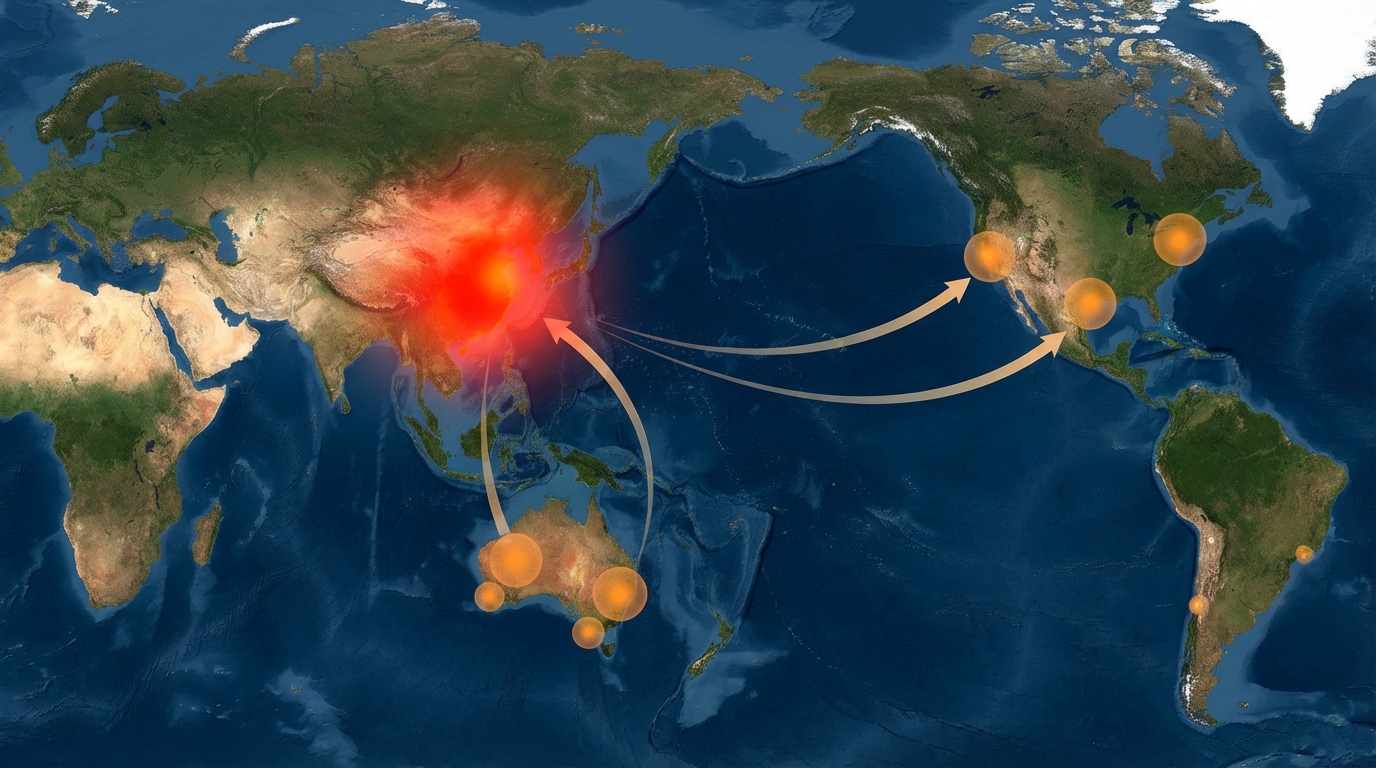
The net effect is stark. Ore mined in other jurisdictions—including concentrates from operations in the United States or Australia—often flows back into this Chinese midstream for separation and magnet production. Attempts to diversify mining supply without building equivalent processing capacity so risk recreating the same structural dependency, simply with more international shipping legs in between.
China Rare Earth Exports and Policy: From Quotas to Strategic Leverage
The interplay between china rare earth processing dominance and china rare earth exports policy has been evident for more than a decade. Rare earths have moved from being treated as a niche industrial commodity to being explicitly framed as a strategic resource in Chinese planning documents.
From the 2010 quota shock to 2020s dual-use framing
In 2010, export quotas and customs enforcement actions reduced shipments of rare earth products—most visibly to Japan—triggering price spikes and supply anxieties in downstream industries. This episode pushed rare earths onto defense and industrial policy agendas across OECD economies. Subsequent World Trade Organization rulings led China to formally remove some explicit export quotas around 2015, but the underlying lesson persisted on all sides: control of processing capacity is a latent policy instrument.
During the 2020s, Beijing increasingly integrated rare earths into a broader “dual circulation” and national security narrative. While formal export quotas became less prominent, other policy tools emerged, including:
- Consolidation of producers into a smaller number of state-guided groups, making coordination easier.
- Stricter environmental inspections that could selectively constrain output.
- Value-added tax adjustments and rebate policies that favor higher-value downstream exports (such as magnets) over raw oxides.
- Licensing and disclosure requirements geared toward tracking end-use sectors, especially where defense applications are involved.
Parallel actions on other critical materials—such as export controls applied to gallium, germanium, and graphite in 2023—demonstrated that Beijing was prepared to use licensing regimes and documentation requirements as tools of statecraft. Market participants increasingly treated rare earths as being on a similar trajectory, even where formal measures lagged behind rhetoric.
Licensing regimes and heavy rare earth leverage
Analysts tracking MOFCOM notices, industrial plans, and press reports describe a policy trend toward categorizing certain rare earth products as “dual-use” or otherwise sensitive. In such a framework, heavy rare earth elements (HREE) used in high-temperature magnets—dysprosium and terbium in particular—are natural candidates for tighter oversight. The market view reflected in 2025-2030 scenario work is that licensing or enhanced due diligence for these exports would be consistent with prior patterns in other strategic materials.
Under such scenarios, china rare earth exports would not stop; rather, they would become more selectively available. Long-term offtake contracts, alignment with Chinese downstream joint ventures, and participation in Belt and Road-related industrial projects might see preferential treatment, while shipments into competing defense ecosystems could face greater friction. This would not necessarily appear as a single headline ban, but as a layered combination of paperwork, quota windows, and compliance ambiguity.
From an operational risk standpoint, the critical point is that policy risk in rare earths is concentrated in the midstream where China’s processing dominance is greatest. Export controls on ore concentrate or upstream mining would matter less globally than targeted friction at the separated oxide, alloy, or magnet level, where alternative suppliers are rare.
Sectoral Exposure: Where the Chokepoints Are Most Acute
Not all sectors are equally exposed to china rare earth processing and export risks. The degree of exposure depends on which elements are required, in what purity, and whether design alternatives exist.
EVs and wind: NdPr magnets at the center
Electric vehicles and modern wind turbines have become emblematic downstream users of rare earth permanent magnets. Traction motors in many EV designs use high-coercivity NdFeB magnets based on neodymium and praseodymium (NdPr), sometimes with dysprosium additions for high-temperature stability. Direct-drive wind turbines use similar magnet systems in much larger volumes per unit.
Multiple demand studies project that NdPr requirements for EVs and wind could drive total rare earth oxide demand to multiples of current levels by the mid-2030s. In this context, dependence on China for separated NdPr oxide, metal, and magnets becomes a central operational vulnerability. Alternative motor designs—induction motors, switched reluctance machines, or ferrite-based systems—can reduce or avoid rare earth use, but typically at the cost of efficiency, weight, or performance envelope.
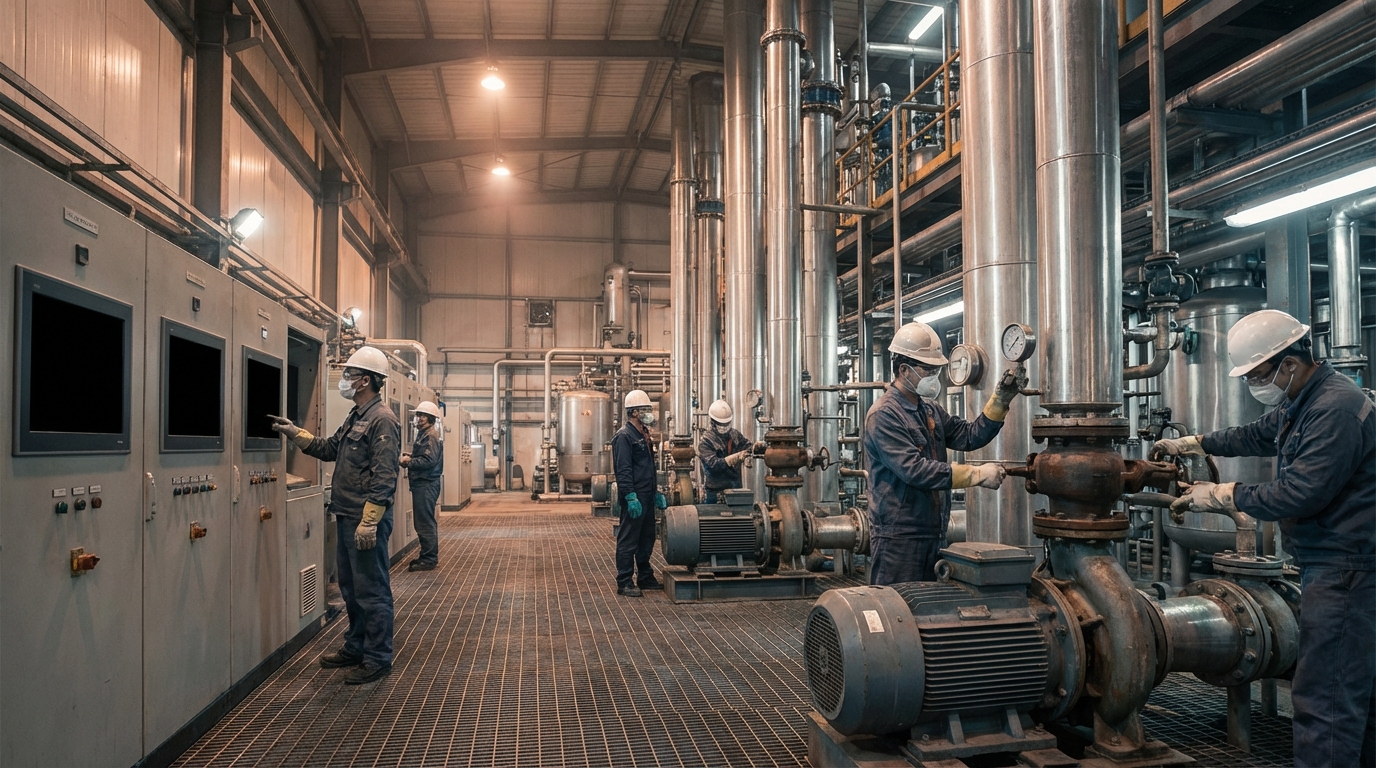
China’s ability to price and allocate NdPr magnets, rather than merely ore, is therefore deeply consequential. Contract disputes, export licensing delays, or sudden environmental inspections at magnet plants can translate directly into missed EV or turbine delivery schedules in distant markets.
Defense and aerospace: heavy rare earths as irreplaceable inputs
Defense and aerospace applications typically require the most demanding magnet grades—high coercivity, thermal stability, and radiation resistance. Achieving these properties often depends on heavy rare earth additions, especially dysprosium and terbium, to grain boundaries in NdFeB or related magnet systems. HREE availability is far more constrained globally than LREE such as cerium or lanthanum.
China’s ionic clay deposits and associated processing plants represent the primary large-scale source of these heavy rare earths. Reserves exist elsewhere, but many are not yet in production or lack processing facilities capable of cost-effective, environmentally compliant separation at scale. As a result, the defense sector in multiple countries has historically relied, directly or indirectly, on materials that originated from Chinese HREE processing.
Substituting away from dysprosium and terbium in high-end magnets is technically possible in some designs through grain boundary engineering, nanostructuring, or alternative magnetic materials, but these approaches are not yet universally mature or qualified across all mission-critical platforms. In this segment, even modest disruptions in china rare earth exports of HREE-bearing products can have disproportionate impact.
Electronics, catalysts, and polishing: diffuse but inescapable
Consumer electronics, petrochemical catalysts, and glass polishing compounds rely heavily on cerium, lanthanum, and other rare earths that are more abundant than NdPr or HREE, but still highly concentrated in the Chinese processing system. Cerium oxide polishing powders for semiconductor wafers and optical glass, for instance, largely originate from Chinese plants even when final polishing occurs elsewhere.
In these applications, impacts from china rare earth processing constraints are often less visible but still material. A tightening in exports of certain grades can delay production of high-end lenses, semiconductor substrates, or catalytic converters. Because these uses are often embedded further up the supply chain, disruptions may be recognized only when finished component deliveries slip.
Unlike with magnets, design substitution options are more varied in some of these segments, but qualification cycles are long and performance tradeoffs significant. As a result, industrial operators frequently accept a degree of dependency on the Chinese midstream while searching for ways to diversify incrementally.
Barriers to Replicating China’s Processing Ecosystem
There is broad recognition among governments and industrial actors that reducing dependence on china rare earth processing is strategically desirable for supply chain resilience. However, practical efforts to build competing midstream capacity face a cluster of reinforcing constraints.
Environmental and permitting headwinds
Rare earth processing generates several challenging waste streams: radioactive residues from thorium- and uranium-bearing minerals; large volumes of acidic or alkaline liquors; and solvent extraction organics that require careful handling. China’s early-stage development of this industry occurred under comparatively lenient environmental regimes, allowing plants to scale with limited opposition. Over time, regulations have tightened domestically, but legacy facilities and established industrial zones provide a degree of continuity.
Outside China, new processing plants encounter far stricter permitting environments from the outset. Environmental impact assessments scrutinize tailings storage, water use, and potential radiation pathways. Local opposition can delay or halt projects, especially where prior industrial contamination has created distrust. These dynamics do not make such plants impossible, but they extend timelines and increase capital intensity.
As a result, several high-profile rare earth projects have either been forced to export concentrates to China for processing or to consider siting chemical plants in jurisdictions with more accommodating regulatory frameworks, even if ore is mined elsewhere. This underscores the gap between securing mining licenses and closing the loop on fully integrated non-Chinese supply.
Technical workforce, IP, and tacit process knowledge
Engineering teams capable of designing, commissioning, and optimizing multi-thousand-tonne-per-year SX and ion exchange plants for rare earth separation are not widely available. China’s domestic universities, research institutes, and state-owned enterprises have trained multiple generations of such specialists. By contrast, much of this expertise in other countries atrophied when rare earth processing shifted to China in the 1990s and 2000s.
Process intellectual property is often not limited to patents. It lives in control logic, standard operating procedures, troubleshooters’ notebooks, and informal knowledge networks among plant operators. Reconstituting this ecosystem elsewhere involves more than importing equipment; it demands long-term investment in people and iterative learning cycles, often under tighter environmental and financial scrutiny than earlier Chinese plants faced.
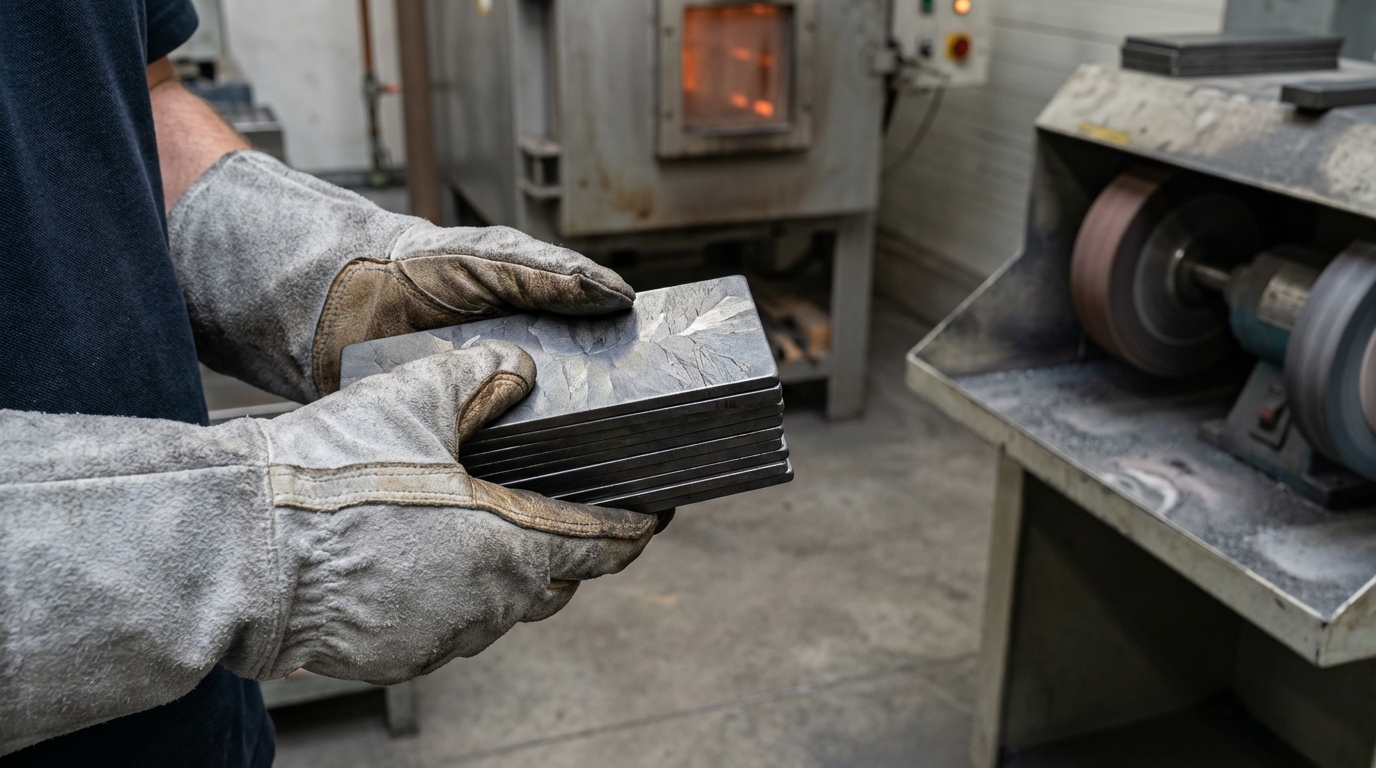
This is one reason why projects that plan to move from ore to separated oxides in a short timeframe frequently encounter delays or restructuring. Engineering, procurement, and construction (EPC) contractors with strong generic chemical plant experience still need rare earth-specific partners to navigate the subtleties of SX design for LREE versus HREE streams, impurity control, and product spec alignment with downstream users.
Logistics, clustering, and scale economics
China’s rare earth industrial base benefits from geographic clustering. In Inner Mongolia, for example, mining at Bayan Obo links directly to beneficiation plants, cracking units, SX lines, and alloy or magnet fabrication within a relatively compact area. The same pattern is evident in southern provinces where ionic clays are leached and processed near regional SX hubs.
This clustering reduces logistics costs, shortens feedback loops between processing stages, and allows shared infrastructure for reagents, waste treatment, and energy. In contrast, many diversification concepts outside China envision separated facilities: mines in remote regions, chemical plants near ports, and magnet production clusters close to end-use industries. Such spatial separation introduces additional transport costs and interfaces, each of which can become a failure mode under stress.
Attempts to diversify supply without replicating midstream processing density tend to reproduce dependency in a different form: ore flows change direction, but separation bottlenecks do not. This is the central scale-economics challenge confronting rare earth policy in the United States, Europe, and allied jurisdictions.
2026–2030 Scenarios: Structural Features That Are Unlikely to Change Quickly
Scenario work undertaken by industry groups, research institutes, and governments for the 2026–2030 period tends to converge on a few structural features, even if specific numbers and timelines differ.
First, most projections anticipate China retaining the majority of global rare earth processing capacity through at least the early 2030s, even under aggressive diversification strategies. New plants in Australia, North America, and elsewhere can reduce the share of global separation happening in China, but replicating multiple decades of cumulative investment within a single planning cycle is improbable.
Second, heavy rare earths are consistently identified as the most persistent bottleneck. Even as projects targeting light rare earths (particularly NdPr) advance outside China, HREE-bearing ionic clay deposits remain heavily concentrated in southern China, and alternatives are earlier in the development curve. This keeps defense, aerospace, and high-end magnet segments particularly exposed to shifts in china rare earth exports policy.
Third, export control risk is increasingly seen as multi-layered. Rather than sudden, all-encompassing bans, the more likely pattern involves incremental measures—enhanced licensing for sensitive end-uses, periodic tightening framed as environmental campaigns, and targeted tax or rebate adjustments. Industrial operators therefore face a regime of chronic friction and episodic disruption rather than a single defining crisis.
Finally, recycling appears in most scenarios as a growing, but not near-term dominant, source of supply. End-of-life magnets from wind turbines, EVs, and industrial motors will gradually provide a secondary stream of material, and a number of Chinese and non-Chinese entities are piloting hydrometallurgical and pyrometallurgical recycling processes. However, given the rapid growth in primary demand, recycling is unlikely to eliminate the need for newly mined and processed material during the 2026–2030 window.
Note on Materials Dispatch methodology Materials Dispatch integrates policy documents (such as Chinese five-year plans and MOFCOM notices), technical literature on rare earth processing, and market data from agencies including the USGS, IEA, and trade statistics on china rare earth exports. This cross-referencing with end-use performance requirements in EVs, wind, defense, and electronics enables an assessment focused on operational feasibility and systemic risk, rather than headline volumes alone.
Conclusion: Trade-offs, Constraints, and Signals to Watch
The core reality of the rare earth sector is that China’s dominance is structurally rooted in processing capacity, not only in reserves. Significant china rare earth reserves underpin this position, but it is the dense mesh of beneficiation plants, cracking units, solvent extraction lines, alloy foundries, and magnet factories that converts geological endowment into strategic leverage.
Efforts to diversify supply faces three hard constraints: environmental and permitting barriers to building new processing complexes; the scarcity of experienced engineering and operational teams outside China; and the scale advantages of China’s existing industrial clusters. These factors interact with policy choices in Beijing, where export licensing, dual-use framing, and producer consolidation can all modulate how china rare earth processing power translates into market and geopolitical influence.
For industrial systems that depend on rare earths, the key trade-off lies between accepting continued exposure to a highly efficient but politically concentrated supply base and bearing higher costs, longer lead times, and technical risk to build parallel capacity elsewhere. Rare earths therefore illustrate a broader pattern in strategic materials: the true leverage point often resides in midstream chemical engineering and policy, not simply in mine mouth tonnages.
Materials Dispatch will continue to monitor weak signals that reshape this landscape: incremental changes in Chinese environmental enforcement at processing hubs; new MOFCOM classifications for rare earth products; commissioning progress and technical performance at non-Chinese separation plants; and shifts in EV, wind, and defense design choices that alter element-specific demand. These are the levers that will determine how far, and how fast, China’s rare earth grip can be loosened—or reinforced—through 2030 and beyond.

