Uncategorized
Greenland Rare Earths: 1.5 Million Tons Underground, Zero in Production


Greenland Rare Earths: Huge Resources, Operational Standstill
Materials Dispatch has followed the Greenland rare earth story through several supply shocks: export quota tightenings from China, scramble purchasing for dysprosium and terbium, and repeated Western promises that “the Arctic will save us.” The core tension has not changed: Greenland holds a globally significant heavy rare earth endowment, yet delivers precisely zero commercial rare earth tonnage in 2026. For supply-chain, compliance, and policy teams, this gap between geological potential and operational reality is no longer just a curiosity; it is a structural risk factor.
Over the past decade, Greenland has moved from speculative footnote to recurring item in board-level discussions on strategic materials. The experience has been sobering. Several counterparties quietly pencilled in Kvanefjeld and Tanbreez as diversification anchors in internal planning around 2018-2020. Regulatory reversals, community opposition, and basic infrastructure gaps have since forced repeated timeline rewrites and contingency planning. That operational history frames this briefing.
- The change: Greenland is now widely recognised as holding around 1.5 million metric tons of proven rare earth reserves, and potentially up to 38.5 million metric tons including resources, while still having no commercial REE mine in operation as of 2026.
- What is covered: Southern Greenland’s flagship Kvanefjeld and Tanbreez projects, the uranium ban and permitting regime, and the logistics/processing constraints that shape any rare earth Greenland scenario.
- What is not covered: Detailed project economics, contracts, or price forecasts; these remain highly uncertain and project‑specific.
- Operational implication: To the extent that Greenland eventually contributes to supply, it is likely to do so on multi‑year timelines, with high regulatory and infrastructure friction but strong potential leverage in heavy rare earths (HREEs).
- Reading limits: Figures from project studies and policy initiatives are subject to revision; no single Greenland project presently has a final investment decision or construction underway.
FACTS: Resource Base, Projects, and Regulatory Setting
1. Greenland’s rare earth resource base in numbers
As of 2026, publicly available geological and policy assessments converge on several key data points for greenland rare earth minerals:
- Greenland holds around 1.5 million metric tons of proven rare earth reserves, with estimates of up to 38.5 million metric tons when broader resources are included.
- This places Greenland roughly in the global top ten by rare earth endowment, with especially strong concentrations in heavy rare earth elements (HREEs) such as dysprosium and terbium.
- Despite this geological position, Greenland’s commercial rare earth production in 2026 is zero. No REE mine is permitted and operating at industrial scale.
The resource base is concentrated in southern Greenland’s Gardar Province, with additional carbonatite and alkaline complexes in the west and south that are less advanced in the project pipeline.
2. Flagship projects: Kvanefjeld and Tanbreez
Two projects dominate any realistic discussion of rare earth Greenland development: Kvanefjeld and Tanbreez. Both are located in southern Greenland, with fjord access and relative proximity to existing settlements, but share exposure to the same regulatory and logistical environment.
Kvanefjeld (Kuannersuit)
- Located near Narsaq in southern Greenland, Kvanefjeld has been promoted as one of the world’s largest undeveloped rare earth deposits.
- Project studies describe resources that include roughly 370,000 metric tons of heavy rare earths and envisage processing ore at around 500,000 metric tons per year to produce approximately 25,000 metric tons per year of total rare earth oxides (TREO).
- The resource is associated with uranium and other by‑products; uranium content is central to the project’s regulatory challenge.
- The project has been led by Greenland Minerals (now Energy Transition Minerals / Greenland Resources Inc., depending on corporate restructuring and branding), with historical links to Chinese strategic partner Shenghe Resources.
Tanbreez
- Also in southern Greenland’s Gardar Province, Tanbreez is an eudialyte‑hosted deposit that is heavily skewed toward HREEs.
- Public technical disclosures have cited resources of roughly 28.2 million metric tons of mineralised material, with rare earth grades in the range of ~0.38% TREO and heavy rare earths representing around 27% of the rare earth mix.
- A preliminary economic assessment (PEA) was completed around 2025 under Critical Metals Corp, following earlier ownership and partnership structures that included Shenghe Resources.
- As of 2026, the project remains at study stage, with no full construction decision or operating mine.
Both projects are positioned as future suppliers of HREEs critical for high‑performance permanent magnets used in defense systems, electric vehicle traction motors, and wind turbines, but neither contributes physical material to the market today.
3. Other relevant Greenland rare earth and associated projects
Beyond Kvanefjeld and Tanbreez, several earlier‑stage or multi‑commodity projects contribute to the strategic picture of greenland mining:
- Motzfeldt (southern Greenland): Rare earth-niobium project, historically with TREO grades around 0.2-0.3%. Controlled by Rainbow Rare Earths, with activity largely paused after the uranium policy shift.
- Sarfartoq (western Greenland): Carbonatite‑hosted rare earth prospect associated with Neo Performance Materials, focused more on light rare earths, with some higher‑grade drill intercepts reported.
- Gronnedal‑Ika and other alkaline complexes in the south: Exploration‑stage REE‑bearing systems, with no advanced development plans in 2026.
- Multi‑metal projects such as Disko‑Nuussuaq (nickel‑copper‑PGM) and Citronen (zinc‑dominant, with rare earth traces) exist but are primarily relevant for other critical materials.
None of these additional projects has reached a construction decision or commercial production, and most are constrained by similar environmental, permitting, and infrastructure considerations.
4. Uranium ban and regulatory framework
A decisive regulatory inflection point occurred in 2021, when Greenland’s parliament adopted a ban on uranium mining and exploration above a low concentration threshold. This decision followed an election in which the Inuit Ataqatigiit (IA) party campaigned explicitly against development of Kvanefjeld due to uranium and environmental concerns.
Key factual consequences for rare earth Greenland projects:
- The uranium ban effectively blocks advancement of Kvanefjeld in its original configuration because the ore hosts uranium as a significant co‑product.
- Several other southern Greenland projects with uranium‑bearing mineralisation face similar legal constraints, depending on measured concentrations and ore handling plans.
- As of 2026, the ban remains in force. Political debates continue, with some parties advocating revision or nuanced thresholds, but no legislative reversal has been enacted.
The mining regime is administered by the Government of Greenland (Naalakkersuisut) under Danish sovereignty, with Denmark retaining control over foreign policy and defence. Licencing decisions are formally local, but international partners (EU, U.S., Nordic states) have signalled strong interest in critical minerals cooperation.
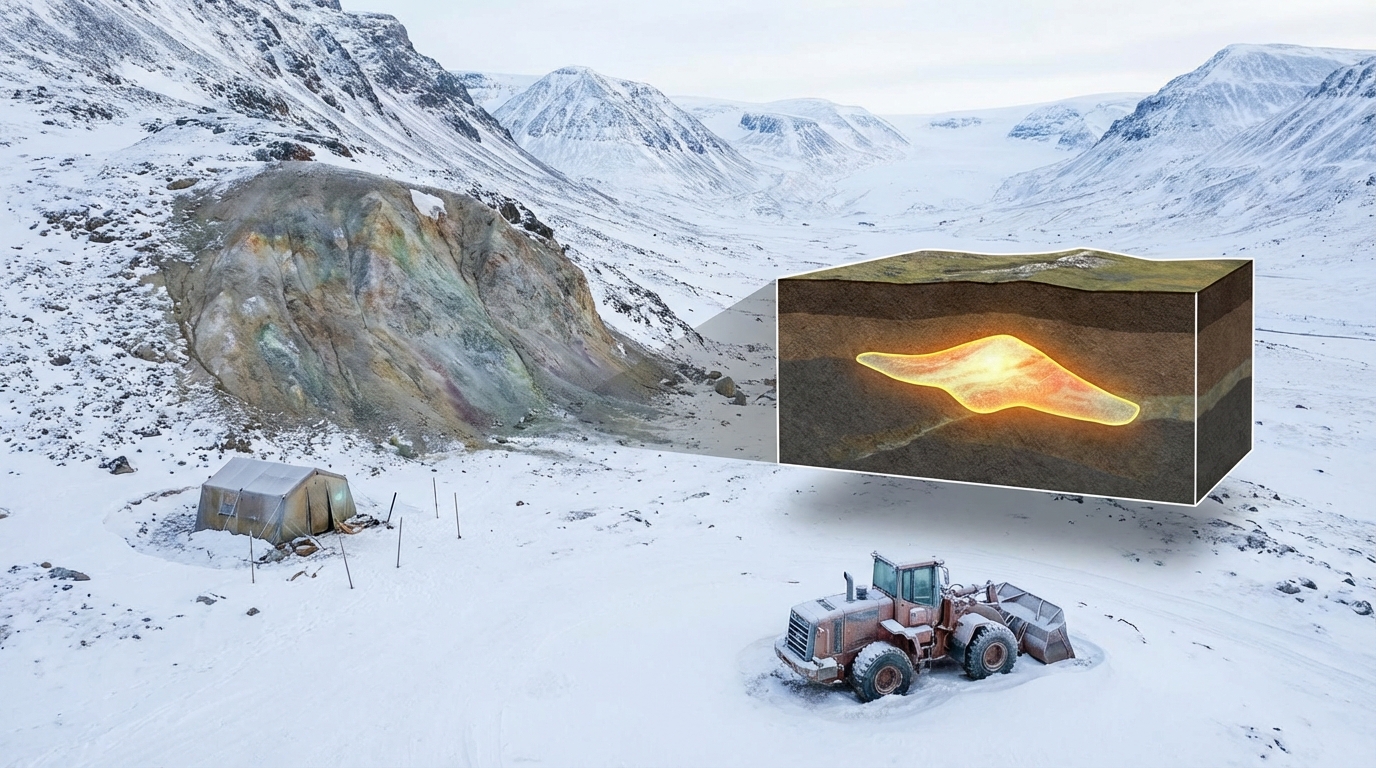
5. Infrastructure, climate, and operational baselines
From an operational standpoint, several facts consistently appear across project documentation and government briefings:
- Outside a few towns, no integrated road or power grid exists. Major mining projects would be required to build dedicated port, road, and power infrastructure.
- Many prospective sites are accessible only seasonally due to ice and weather conditions; southern Greenland is more accessible than the far north but still faces winter constraints.
- Greenland’s total population is on the order of tens of thousands, with limited local mining workforce and engineering capacity, implying substantial reliance on imported labour and services.
- Existing mining activity on the island is limited to a small number of non‑rare‑earth operations (for example, gold or industrial minerals), underlining the lack of current large‑scale mine operating experience in this jurisdiction.
6. Global context: China’s processing dominance and Greenland’s relative position
International surveys and industry analyses align on several broad points about the global rare earth landscape:
- China controls a very large share of known rare earth reserves (on the order of tens of millions of metric tons) and an overwhelming share of global processing capacity, often cited around 95% of refining and separation.
- Non‑Chinese supply comes primarily from projects such as MP Materials’ Mountain Pass (United States) and Lynas (Australia), which are relatively light‑rare‑earth‑heavy and less focused on HREEs.
- Heavy rare earth supply, especially dysprosium and terbium, is structurally tight and closely tied to Chinese assets in China and Myanmar.
- On a pure geological basis, Greenland’s endowment of HREEs places it among the most strategically relevant future sources outside China, even though it currently contributes no production.
Several policy reports and think‑tank analyses have warned of emerging supply deficits in HREEs for defense and clean‑energy applications in the second half of the 2020s, using Greenland as a hypothetical backstop in many scenarios.
INTERPRETATION: Strategic Reading and Operational Consequences
1. Greenland as paradox: central in strategy decks, absent in warehouses
From an operational vantage point, Greenland sits in an uncomfortable middle ground. On paper, it offers one of the few sizeable heavy rare earth alternatives to China. In practice, the combination of uranium politics, infrastructure scarcity, and limited institutional mining experience has kept it out of every real‑world supply chain.
To the extent that planners have treated Greenland as a near‑term diversification source, that has already proven costly. Internal sourcing roadmaps developed in the late 2010s projected first tonnage from Kvanefjeld and possibly Tanbreez well before 2025. Those projections have slipped repeatedly, and the 2021 uranium ban transformed them from optimistic to implausible in the near term. This experience has hardened scepticism toward “resource‑rich but rule‑fluid” jurisdictions among downstream industrial buyers.
2. Kvanefjeld: strategically huge, politically radioactive
In any sober ranking of strategic projects, Kvanefjeld remains a top‑tier HREE deposit by size and potential output. If it were permitted and built broadly along the lines of its pre‑feasibility planning, it could provide a meaningful share of non‑Chinese heavy magnet material by the early 2030s.
However, under the current uranium ban, this potential is locked. The political cost of reversing a ban won on the back of a clear electoral mandate is high. Even if a future coalition in Nuuk decides to soften or nuance the law, the process of legislative change, revised environmental impact assessments, and renewed community consultation would likely add multiple years before any shovel hits the ground.
There is ongoing technical discussion about whether advanced separation technologies or altered mine plans could isolate or export uranium in a way that satisfies both the law and local concerns. To the extent that such options are technically and commercially viable, they still face the hurdle that trust is currently low between parts of the local community and the Kvanefjeld operator. In the Greenland context, social licence is not a box‑ticking exercise; it is the primary gating factor.
3. Tanbreez: premium HREE geology, infrastructure grind
In contrast, Tanbreez carries less uranium baggage and clearer alignment with the prevailing political narrative of “green transition minerals.” Its eudialyte mineralogy, high HREE proportion, and gallium and zirconium co‑products give it both strategic appeal and metallurgical complexity.
The main friction here is not a single regulatory veto but cumulative operational drag: remote location, lack of grid power, need for bespoke port and road infrastructure, challenges in processing eudialyte at scale without defaulting to Chinese know‑how. In practice, those obstacles translate into longer lead times and higher execution risk. Even if permitting aligns, turning Tanbreez into a stable supplier will likely be a decade‑scale project, not a three‑year sprint.
Experience from other new‑build mining jurisdictions suggests that early‑stage promises of rapid commissioning tend to under‑estimate the delays associated with Arctic construction seasons, supply‑chain congestion, and workforce turnover. To the extent that Tanbreez emerges as Greenland’s first serious rare earth mine, its performance will shape external perceptions of the entire jurisdiction.
4. Multi‑year timelines and HREE deficits
Several scenario studies have modelled HREE deficits in dysprosium and terbium in the second half of the 2020s if demand from electric vehicles, offshore wind, and advanced defense systems continues to grow while China tightens export conditions. Some of those studies assume that Greenland could relieve 20–30% of projected annual shortfalls by the early 2030s if one or both of Kvanefjeld and Tanbreez come onstream at scale.
Under current conditions, that remains aspirational. Realistically, Greenland is better understood as a potential second‑wave supplier, emerging after first‑wave expansions in places like Australia, North America, and possibly Sweden. If political and technical bottlenecks ease, Greenland could then tilt the balance in the 2030s and beyond, especially in HREEs. Until that happens, any reliance on Greenland to plug near‑term deficits carries material execution risk.
5. Compliance and ESG: uranium, Indigenous rights, and external partners
From a compliance perspective, Greenland combines attractive macro features-rule of law, Danish/EU alignment, low corruption-with dense project‑level sensitivities:
- Uranium and dual‑use concerns: Kvanefjeld’s uranium content engages nuclear‑related scrutiny on top of mining regulation. Even if legal obstacles are reduced, downstream buyers would likely need robust traceability and assurances about handling of radioactive by‑products.
- Indigenous rights and local consent: Inuit communities and political parties have already demonstrated their ability to stop projects perceived as environmentally or culturally unacceptable. Any attempt to bypass or minimise this dimension is likely to trigger new opposition.
- Non‑Western technical partners: Historical and, in some cases, current Chinese corporate involvement (for example via Shenghe) raises questions in Washington, Brussels, and some corporate boardrooms about technology transfer, dependence, and sanctions exposure.
To the extent that companies and states frame Greenland as a “clean” alternative to China, failure to take these ESG and geopolitical layers seriously would create reputational and regulatory liabilities rather than diversification.
6. How Greenland reshapes sourcing conversations-if it ever turns on
In procurement and risk‑review cycles observed by Materials Dispatch, Greenland has already altered the structure of discussions even without shipping a single tonne. Teams no longer ask only “Is there a non‑Chinese source?” but rather “Is the non‑Chinese source real, bankable, and on a credible timeline?” Greenland is often cited as the example of how geology alone is not enough.
If Kvanefjeld or Tanbreez progresses materially—clear permits, funded infrastructure, visible construction—this would likely change how Western OEMs and governments negotiate with Chinese suppliers. Even a credible future alternative can influence bargaining dynamics. Conversely, continued stagnation will reinforce the perception that Arctic headline numbers are more mirage than mitigation, pushing more attention toward incremental expansions in less challenging jurisdictions.
WHAT TO WATCH: Signals That Greenland Is Moving From Hype to Supply
Several observable indicators can help distinguish rhetorical support from concrete progress in Greenland rare earth development:
- Legislative movement on the uranium ban: Any draft bill, official consultation, or coalition agreement explicitly addressing modification of the 2021 uranium law would materially change the outlook for Kvanefjeld and similar deposits.
- Definitive feasibility studies (DFS) and bankable engineering for Tanbreez: Transition from PEA‑level narratives to detailed engineering and environmental baselines would indicate that the project is entering a more serious execution phase.
- Binding infrastructure commitments: Announcements of financed port, road, and power projects dedicated to mining in southern Greenland, whether public, private, or blended, would reduce a central execution risk for all rare earth Greenland assets.
- Processing strategy clarity: Clear decisions on whether concentrates will be shipped to third‑country refineries (EU, U.S., elsewhere) or processed partially in Greenland, and with which technical partners, will signal how much of the value chain can realistically move out of China.
- Community agreements and benefit‑sharing frameworks: Publicly disclosed impact‑benefit agreements or similar structures with local Inuit communities will show whether social licence issues are being addressed or deferred.
- Security and export‑control positioning: Inclusion of Greenland projects in EU, U.S., or allied critical mineral funding instruments and security frameworks will indicate how central policymakers consider these deposits to be in long‑term strategy.
Conclusion
Greenland’s rare earth story is no longer simply about untapped potential. It is a live case study in how resource endowment, domestic politics, Indigenous rights, and Arctic logistics can combine to keep world‑class deposits out of the supply chain for a generation. For heavy rare earths in particular, the island sits at the intersection of Western strategic anxiety and very local concerns about land, health, and control.
On current trajectories, Kvanefjeld and Tanbreez are unlikely to offer rapid relief to looming dysprosium and terbium tightness, but they remain among the few plausible pathways to structurally reduce China’s dominance in the 2030s. Whether that promise turns into tonnage depends less on geology and more on law, infrastructure, and trust. Materials Dispatch will continue active monitoring of regulatory and industrial weak signals from Nuuk, Copenhagen, Brussels, Washington, and the project sites themselves that will define how this story evolves.
Note on Materials Dispatch methodology Materials Dispatch integrates continuous monitoring of decisions, consultations, and technical releases from Greenland and Danish authorities with international critical‑minerals policy documents and company‑level disclosures. This is combined with cross‑checking against observed supply‑chain behaviour and the technical specifications of end‑use applications in defense, energy, and advanced manufacturing to test whether narrative claims align with operational realities.


